GET YOURS RIGHT HERE:https://amzn.to/3RVJl4O
(Amazon Affiliate)
In today’s fast-paced world, the quest for a fulfilling and harmonious life often brings us back to our roots, to the wisdom of those who walked the Earth long before us. Among various Indigenous cultures, the Anishinaabe, or Ojibwe, people have preserved profound teachings that resonate with the essence of our human experience. Their teachings, particularly the Seven Grandfather Teachings and the principle of Seven Generations, remind us that our lives are interwoven with the lives of others and the environment around us. This blog post invites you to embark on a journey towards Mino-bimaadiziwin, or “the good life,” through these sacred teachings.
Understanding Mino-bimaadiziwin
Mino-bimaadiziwin encapsulates the Anishinaabe philosophy of living well. It is an aspirational state where individuals strive for balance, harmony, and wellness in all aspects of life. The teachings provided by the Seven Grandfathers serve as a moral compass guiding us towards this ideal state. These ancient laws advocate for living in a way that respects nature, fosters community, and cherishes personal growth.
Available here:https://amzn.to/3RVJl4O
The Seven Grandfather Teachings
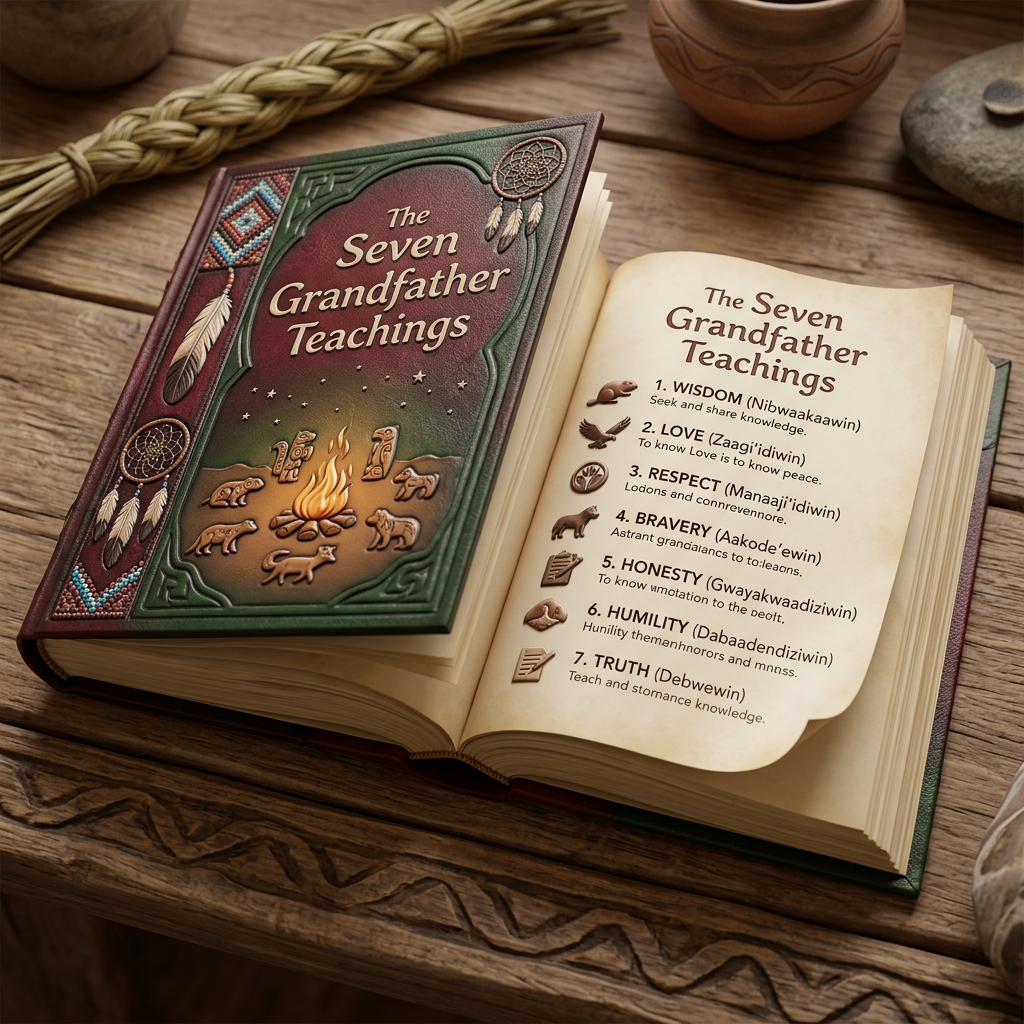
The Seven Grandfather Teachings are gifts of wisdom that have been passed down through generations. These teachings encompass the qualities and values necessary for a good life. Here are the Seven Grandfather Teachings:
- Wisdom (Nibwaakaawin)
Wisdom is not merely about knowledge; it involves understanding life through experience, reflecting on our choices, and seeking to make informed decisions. It teaches us to listen closely to the world around us, to learn from both our successes and failures. - Love (Zaagi’idiwin)
Love is at the heart of all relationships. It embodies kindness, compassion, and a deep sense of care for ourselves, others, and our environment. The teaching of love reminds us that genuine connections enhance our life’s harmony. - Respect (Mamahwotam)
Respect is a fundamental value that encourages us to honor all beings—human, animal, and plant. This teaching urges us to practice humility and gratitude, understanding our place within the larger tapestry of life. - Bravery (Aakode’ewin)
Bravery is not merely the absence of fear but the courage to face our fears and challenges. It empowers us to stand up for what is right, even when it is difficult. This teaching encourages us to embrace our authentic selves and pursue our dreams courageously. - Honesty (Gwekwaadiziwin)
Honesty fosters trust and integrity in our relationships. This teaching compels us to be truthful in our words and actions, nurturing transparency and authenticity. Honesty is essential for personal growth and for building a connected community. - Humility (Dabaadendiziwin)
Humility allows us to recognize our limitations and acknowledge the strengths of others. It encourages us to approach life with an open heart and to learn from those around us. Humility teaches us that we are part of a greater whole. - Truth (Debwewin)
Truth signifies the importance of seeking and embracing the authentic reality of our experiences. It calls us to be sincere in our pursuits, to confront our truths, and to remain grounded in our values. This teaching connects us to our spirituality and the essence of existence.
The Principle of Seven Generations
One of the core guiding principles of the Anishinaabe culture is the concept of considering the impact of our actions on the next seven generations. This perspective encourages us to think beyond immediate gratification, focusing instead on sustainability and the long-term health of our communities and environment.
By acknowledging that our decisions influence not just our lives but also the lives of future generations, we foster a sense of responsibility and stewardship towards the Earth. This principle invites us to create a legacy characterized by respect and care, ensuring that the joys and resources we enjoy today are available for those who come after us.
Integrating Indigenous Wisdom into Modern Life
As we strive for Mino-bimaadiziwin, integrating the teachings of the Seven Grandfathers into our daily lives can lead to profound transformations. Here are some practical ways to incorporate these teachings:
- Cultivating Wisdom
Engage in lifelong learning. Take time to reflect on your experiences and seek knowledge from various sources, including elders and mentors. - Fostering Love
Practice acts of kindness and compassion in your community. Show appreciation for your loved ones and remember that every act of love strengthens the fabric of society. - Embracing Respect
Respect the diversity of cultures and perspectives. Treat others with kindness and patience, and develop an understanding of the environment and its inhabitants. - Demonstrating Bravery
Embrace challenges as opportunities for growth. Stand firm in your beliefs and support others in their struggles, fostering a culture of courage. - Upholding Honesty
Be truthful in your interactions. Create a safe space for others to express themselves authentically and encourage honesty in relationships. - Practicing Humility
Recognize your strengths while acknowledging the contributions of others. Approach new experiences with an open mind, ready to learn and grow. - Seeking Truth
Engage in self-reflection. Consider your values, beliefs, and motives, and strive to align your actions with your inner truth.
Conclusion
The teachings of the Anishinaabe and the principles of Seven Generations and the Seven Grandfather Teachings offer powerful guidance for navigating the complexities of modern life. By embracing these timeless lessons, we can cultivate a deeper understanding of ourselves and our place in the world.
Incorporating these teachings into our lives leads not only to personal growth but also to the creation of a harmonious and balanced community. As we embark on the path to Mino-bimaadiziwin, we can transform our lives and honor the wisdom of our ancestors, ensuring that we leave a positive legacy for generations to come.
